
Lectures
Joy offers tailored lectures (only in Swedish) from a patient perspective with themes such as:
Living with Dissociative Identity Disorder.
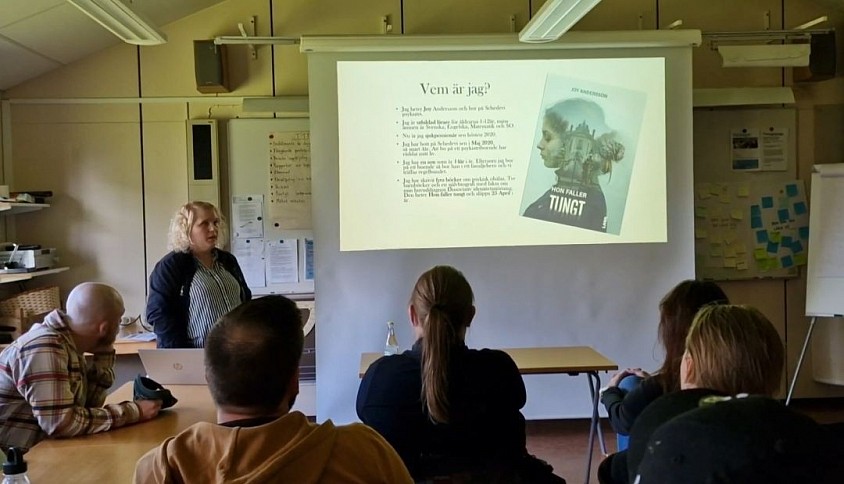
What is it like to live with mental illness that arose due to childhood trauma? Joy lives with several psychiatric diagnoses, including Dissociative Identity Disorder, which is a trauma-related psychiatric diagnosis where you dissociate a lot and experience multiple personalities.
Joy offers a high-level lecture for both large and small groups. The focus here is on what it is like for her to live with Dissociative Identity Disorder, but a diagnosis rarely comes alone, co-morbidity is common and that is Joy's experienced wholeness
Dissociative Identity Disorder is a trauma-related psychiatric diagnosis that has turned Joy's entire life upside down. If you want to read more about DID, go to the Dissociative Identity Disorder tab.
Being a mother and living with mental illness.
Living with a mental illness is difficult, add in being a single mother and it gets complicated. Joy had her son in 2010, four years before the famous wall came in the way and nine years before she received the correct diagnosis.
Here Joy describes the dilemma and difficulties of being mentally ill and at the same time balancing a life as a parent. From being a single mother to having to ask social services for help. How the response from social services was and how she, with the help of her creative streak, produced a couple of children's books for her son to explain why he could not live with his mother. The books Kottens mamma blir sjuk/Kotten's mother gets sick (for younger children) and Kotten bor inte hos mamma/Kotten doesn't live with mom (for slightly older children) are available for purchase at Adlibris and Bokus (see the author tab for more information about the books).
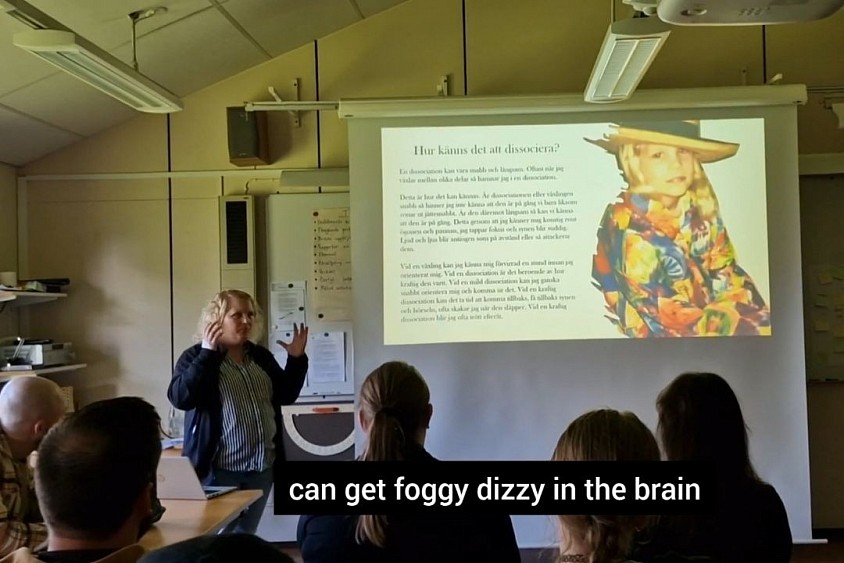
Trauma-focused care - How can healthcare respond to someone with trauma diagnoses?
Joy has many years of experience as a patient and has experienced both positive and negative care situations. Joy talks about the importance of inpatient psychiatric care having a trauma perspective, which unfortunately often does not exist today.
Through a trauma perspective in healthcare, more people would receive the correct diagnosis and the correct treatment. Many times, trauma patients receive the wrong diagnosis and therefore the wrong treatment. Joy has experience of being mistreated for many years because the healthcare system made a diagnosis, Emotionally unstable personality syndrome, without conducting an investigation. Many diagnoses have the same or similar symptoms but different reasons for the symptoms and the patient therefore needs different treatments.
Living in a psychiatric home - What makes a good psychiatric home?
Joy has lived in a psychiatric facility for over 6 years. Living at BMSS (Housing with Special Support) has saved Joy's life and provided a safe everyday life, which has done a lot to stabilize her well-being and improve. Joy has lectured together with her resident and then talked about what it is like to live in the facility and a little about her diagnoses and experiences.
A good accommodation is a accommodation with a user perspective, where there are trained and committed staff and a constant development-oriented mentality. A good accommodation has the individual in focus by always seeing the person they are working with and not a disease. Is there a perfect accommodation? No. But there are accommodation that is in constant development, which provides an environment where the patient can grow and become their best.
Together, the residential staff and Joy have slowly learned about how she works and what she doesn't. What needs she has, what she can do on her own and what she needs support with. Getting to know yourself is an ongoing project, especially when living with Joy's diagnoses.
Life before and after...
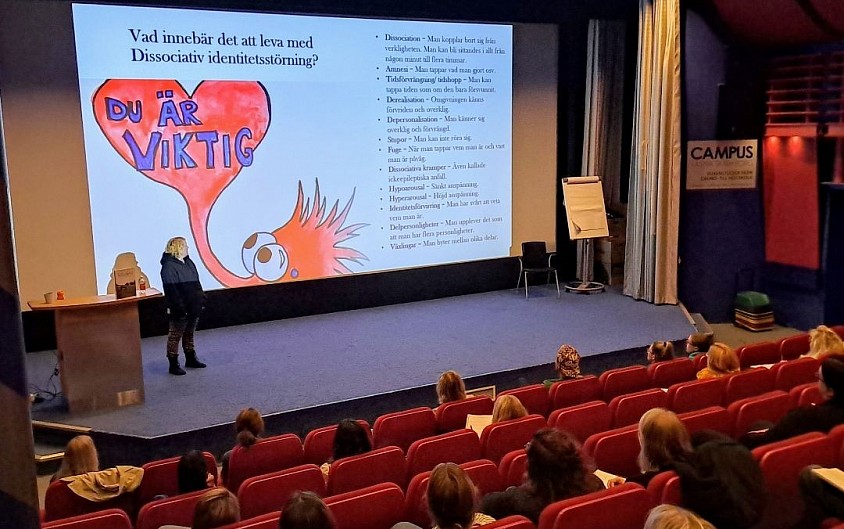
What was life like before mental illness and what is it like after? What is it like to live an active and productive life with a university education, a steady job, a condominium and children, only to then become mentally ill and lose almost everything?
Dissociative identity disorder and complex PTSD develop due to repeated trauma, something Joy experienced during childhood. She also developed recurrent depression, self-harm, an eating disorder, and has made several suicide attempts.
What was it like for Joy to have built a life that was then shattered? How can one live a productive life only to have it collapse due to a diagnosis she had lived with since childhood?
It took 5 years to get the right diagnosis, even though Joy was diagnosed in 2019, she still struggles with prejudice and mistrust regarding her main diagnosis, Dissociative Identity Disorder (DID). What was it like living in the chaos that became and what finally made things slowly turn around and you started to see improvements?
Many questions and just as many answers from Joy's patient perspective. She talks about what it's like to go from living to surviving. From surviving to slowly learning to live again in a new way.