Blog, part 1
Crazy and shit...
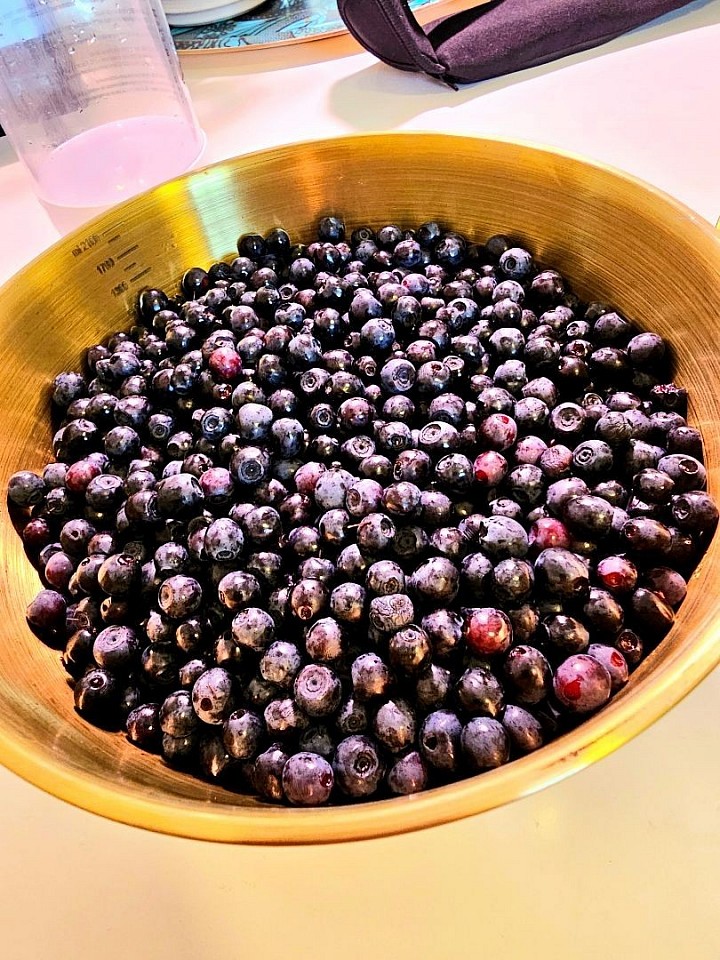
Today I feel spaced/disoriented and have a headache. We've still kept going, picked blueberries and ate blueberry pie, because apparently that was decided yesterday. But I've kind of had to fight not to get caught up in a diss. Right now there have been a lot of substitutes and that makes us more insecure, there's nothing wrong with them but they don't know me that well. We're messy inside and I feel anxious. There have been a lot of people in and out of the Hub and sometimes someone has been co-conscious (that we've been two at the same time and fronting) and of course it gets really confusing when that happens. The body gets so tired when we switch a lot and it's messy in the Hub. I don't even really know why or what I'm writing about or for but yeah...
I feel exhausted and ready to cry. The crybaby is really annoying, but she has nothing to do with me feeling ready to cry. I have a lump of sadness and anxiety inside and I feel dizzy and dissociative. It feels like we're going to switch soon. But I don't know... It gets so fluid and unclear when switching...
That joy and energy we had a few days ago is gone, but that's partly because I'm here. I try to mask it so they don't know who's here because I know a lot of people don't like me. Everyone thinks I can't handle the ground floor but I've even made next week's menu, although I think it's terribly hard. I'm soon going to be unable to stand the change because I can't stand being here anymore... but I think it's one of the little ones who wants to come and paint, she's jumping around like a fucking whirlwind in the Hub.
// Jonas
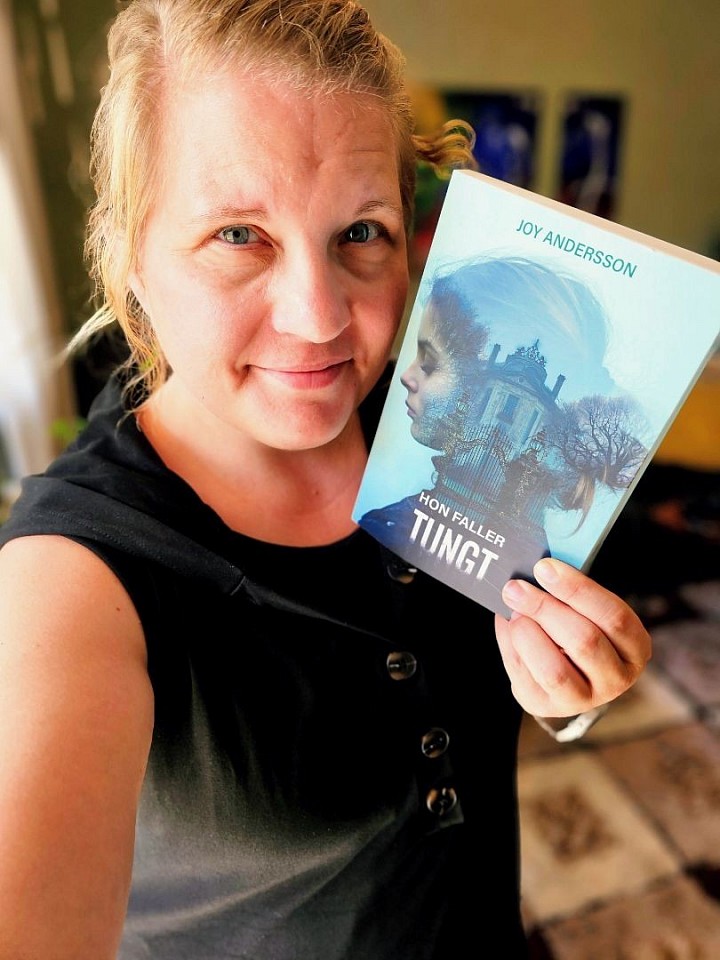
20 days until 'She Falls Heavy' is released as an audiobook!
Yesterday morning we went to the market and bought fabric. There was one that was selling fabric from ten kronor a meter, which is really cheap. We found a few different fabrics that we want to sew clothes for ourselves and then we bought some fabric for my best friend's children too. Then my best friend was here for a couple of hours with her two youngest children. It was cozy.
We were at the health center on Tuesday to discuss our body pain. The gist of it was that we have to accept the pain and that we will have to live with it, something we have already figured out ourselves... Anyway, the doctor mentioned fibromyalgia and something called hypermobility syndrome but that an investigation was needed to confirm. Then he checked some of my joints and said that I am hypermobile but that the joints are still intact... By that, the doctor meant that it will get worse. He was happy when I said that I used to push through the pain and both walk and exercise anyway. That's what you have to do otherwise it gets even worse and we have already figured that out then because we feel increased pain every time we exercise and move less. The examination itself went well but we were in a lot of pain afterwards.
Our pain seems to move around and is located both in the muscles and in the joints and connective tissue. From what I understand, it is common for traumatized people to have pain and different pain diagnoses. I think a lot of it has to do with the nervous system, which is messing up a lot. Then he said that I most likely have IBS... and I think so because my stomach is a bit bloated. Everything is connected, including the fact that we have rosacea, which sometimes gives us red rashes on our faces.
Now that we're feeling a little better, we thought we'd try to get back to work on things. We've decided to go to the gym again two days a week and we started on Monday. Then we're trying to build up a feeling that chasing our dreams is possible... We dream of being able to lecture in the future and maybe be able to save up and go on vacation with a friend or sister or something. Then it would be fun to be able to write another book, one in a positive spirit with the theme of how we get better. Not relevant yet because we're in the middle of the process but we've started writing some notes and stuff, so we can have something to fall back on.
On August 20th, our book, She Falls Heavy, will be released as an audiobook. It will be so much fun that it will finally come as an audiobook. We haven't listened to it yet but will be able to do so before it is released so we can approve it. We have chosen a female narrator as we thought it would be the best fit. 'She Falls Heavy' has sold better than we thought, which is great fun. Now we hope that it continues to spread so that more people learn what Dissociative Identity Disorder is.
Hope everything is well with you!
// Joy
PS. The hospital has changed the correct diagnosis in the medical record after we pointed out the error to them. So that's good.
Why does healthcare misdiagnose many trauma patients?!
Right now we feel incredibly frustrated that the healthcare system continues to have poor trauma expertise. We are so tired of being misdiagnosed all the time. Now that we were in the hospital, they wrote EIPS as the main diagnosis again, even though we don't have that diagnosis. And every time they write EIPS in our papers, we are treated based on that diagnosis. Every time we come to the hospital, they ask what caused us to have a crisis this time... Now we are starting to understand, because apparently small things (like setbacks) can cause EIPS patients to react very strongly and seek medical care. That's when they have that BI or three-day hospitalization thing that we never understood. (Addition: I don't mean that BI is in any way bad. Because it has been proven effective in certain situations. I think the main reason we haven't gotten into it is that we live 1h15min from the hospital. Then we probably found it annoying to be offered 3 days when we are so unwell that we need more. But as someone said, BI should be used more preventively.) We are always looking for a longer downward spiral and when it starts to become dangerous, like suicidal. Not because we have had a small setback. I am so eternally tired of explaining over and over how we work to still get the slush funnel diagnosis of EIPS at the hospital. How much do we have to explain how we work?! I can't take it and it is incredibly insulting not to be believed or listened to.
Here are some facts about the differences and similarities when it comes to DID, complex PTSD and EIPS...
Symptoms that are similar in DID, complex PTSD and EIPS:
- Emotional dysregulation.
- Fear of being abandoned (We don't have that symptom very much).
- Dissociation and detachment.
- Self-harm and impulsivity.
- Problems trusting people.
- Unstable relationships.
So what makes EIPS different?
You live with a feeling of being fragmented in your personality without, for that matter, living with the feeling of being multiple personalities. EIPS often develops due to childhood trauma but can also develop without this. You have a vulnerability that makes it possible for you to develop EIPS.
You have:
- The feeling that the relationship is all about survival.
- Chronic feeling of emptiness.
- One's emotional reactions feel like a matter of life and death.
- You are black/white in your thinking. You either idealize or you devalue people.
- You have an unstable sense of identity.
What makes complex PTSD different?
Complex PTSD develops due to repeated long-term trauma and neglect. Not necessarily in childhood but often.
You have:
- Hypervigilance, a nervous system that rarely rests.
- Deep-seated feelings of shame.
- Has a nervous system caught in a threat.
- "Regular" and Emotional flashbacks.
- Self-doubt, but a more stable identity.
- Harsh internal dialogues.
- People often have fragmented memories of trauma.
What makes DID different?
DID develops due to long-term, repetitive childhood trauma, before the age of 10-12 years. One has:
- A feeling of living with multiple personalities.
- Lively internal dialogues where different personalities interact.
- People live with amnesia in everyday life, both about current and older events, as well as fragmented memory about traumas, for example. This is partly because the brain likes to hide severe traumas from the person and because switching between personalities creates amnesia because one personality cannot remember what the other personality has done.
- People dissociate a lot and often in different ways.
- An overactive nervous system that is stuck in fight, flight, freeze, and scramble.
- Deep feelings of shame that are often embedded in the subconscious.
- "Regular" and Emotional flashbacks, often on a daily basis.
- Self-doubt but not an unstable personality like in EIPS. In DID, one has a feeling of having multiple personalities rather than one unstable one.
Can anything be done about these diagnoses?
In EIPS, you can learn to build security, reduce reactivity and learn to self-regulate. Vulnerability does not disappear, but with time, security and care it can ease. Often, the therapy form DBT is used to manage EIPS. EIPS is a different way for your personality to function. You can have PTSD as an EIPS patient, but you can also live with EIPS without PTSD.
Complex PTSD is difficult to treat because the nervous system does not function like many others. With a lot of time and security, you can do trauma treatment in different ways and learn to manage yourself and your everyday life. Complex PTSD is usually chronic, but with the right treatment, the symptoms can decrease.
DID, like complex PTSD, is very difficult to treat. The nervous system and brain work differently and you live with the feeling of being multiple personalities in one and the same body. Much of the treatment is spent on stabilizing the patient and getting the different personalities to cooperate and coexist. In some cases, attempts can be made to make the personalities merge into one, but this usually requires many years of treatment. DID is a chronic condition, but with awareness and the right treatment, the symptoms can be relieved. When you live with DID, you always have complex PTSD.
There are certainly several similarities and differences. All three of these diagnoses are of course also very individual, as everyone who lives with them is different. Well, that was at least a little about it. How can we make healthcare and society more trauma-aware?! Do you have any good suggestions because right now we are frustrated to the max.
All the best to you!
// Joy
Hur kunde de missa min DID?
Vad man ska göra? Jag har inte jobbat inom psykiatrin. Jag har bara upplevt psykiatrin från ena hållet. Vet inte varför dem anställer så många kalla lågutbildade människor. Personer som inte verkar vara intresserade av det mänskliga psyket.
Vet inte varför övergrepp inom psykiatrin tystas ner. Varför det är mycket mer okej att feldiagnosticera där. Det känns inte som att vården är formad för att hjälpa.
Också svårt att prata med nån som är resistent mot kritik.
Okej, det här va inte så muntert! Men ibland är det bättre å riva ner å börja om.
Home again from the hospital
On Tuesday we came home from the hospital. It's great to be home again but we're so tired. Completely exhausted actually. I've had to rest several times during the day to keep up, but that acute, really bad feeling that becomes dangerous doesn't feel like it's that close anymore. Today we're freezing despite the 27-degree temperature... completely normal... but it's probably the mental fatigue that's causing it. Yesterday we lay in bed for a few hours, today we've developed and laid on the couch instead.
We have started to let all the parts that want to be heard do so by writing down what they need to be said. It feels so important for us to get all of us on the same track. It will be a long process but it feels necessary and we are working with one of our friends who also lives with DID. Our counselor is really cute and all, but he doesn't have the same view of DID as we do. He constantly wants it to be that one of all the parts is the real Joy... it bothers us all that he has this attitude. All of us form the whole Joy and none of us is better or more right than anyone else. We have never felt that one of us is the original part and probably never will... But how are we going to get him to understand this?
All the parts (even the destructive ones) must be present and they need security and a chance to have their say. I hope that we can communicate better about it and that we can perhaps feel a little better by understanding ourselves a little more. Writing and then analyzing is something many of us enjoy and are quite good at, so utilizing this is probably a good idea.
Then we want to get that thing of having goals and things to strive for again... I hope it comes back, that drive, as it were.
Hope everything is well with you!
// Freya
Some thoughts on trauma awareness
Sitting and thinking about that thing about trauma awareness, there are so many people who have a terrible grasp of what it means to have trauma. Especially in healthcare, you need to get better at trauma and how to deal with this patient group. Nowadays, this patient group is often treated as attention-seeking, impossible, difficult to treat and that they are locked up, exaggerating and dramatic. But that is rarely the case. If you live severely traumatized (usually from childhood trauma), the problem lies in the nervous system. The brain changes on a deeply complicated level, for example, the structure of the brain changes so that the prefrontal cortex changes, which means that the traumatized person has difficulty regulating emotions, making rational decisions and controlling impulses. The prefrontal cortex is involved in how we process memories and experiences. Studies have shown that poorer structural and functional function of the prefrontal cortex reduces cooperation between this and other parts of the brain that regulate emotional processing and how the brain stores and manages memories. This leads to the brain having difficulty turning off the body's alarm system and you get stuck in a kind of hypervigilance. You remain in fight, flight, freeze and fight mode which means you become chronically stressed which leads to sleep disorders, further affecting memory and concentration and problem-solving abilities.
There is something called PTSD (Posttraumatic Stress Disorder). PTSD is something that can develop after a trauma and is an anxiety disorder. PTSD means that you have re-experiencing the traumatic event, you have avoidant behavior when it comes to things that remind you of the trauma and you may have difficulty concentrating and problems regulating emotions. PTSD becomes an obstacle in everyday life when you have difficulty functioning normally.
Then we have complex PTSD which can develop from repeated trauma and which has the same symptoms as regular PTSD plus you have major problems with emotion regulation, a negative self-image and relationship problems. Some dissociation problems are also present in complex PTSD.
Furthermore, we have OSDD (Unspecified Dissociative Syndrome) and DID (Dissociative Identity Disorder). The difference between these is primarily that OSDD is a little different as you do not live with amnesia in the same way as with DID. I live with the diagnosis of DID. When you live with DID you always have complex PTSD and thus its symptoms, but you also experience that you have multiple personalities and you dissociate a lot and often. A dissociation can look extremely different, I base my/our reality on my/our everyday life and my/our experiences. Everyone is different with different traumas and experiences and different sub-personalities. As I said, dissociation can look different but generally it is about disconnecting from reality in different ways. For example, we can get stuck sitting for long periods of time, we zone out from reality and end up in some kind of vacuum. Sometimes we "just" zone out, while other times it can be a slow switch between the parts. We often get a feeling of being spaced out, as if at a distance from everything that is happening. Sounds and lights can be distorted and become either louder/sharper or lower/weaker. A shift between personalities can be fast or slow and basically always happens due to some kind of trigger (it can be both external and internal). DID is an incredibly complicated diagnosis and the shifts make both the person living with DID and everyone around them confused. It is difficult to keep up because there is often amnesia between the parts, which means that one sub-personality cannot remember what another sub-personality has done because they do not share memories. I could write much more about DID but I think we will move on to the next question;
How can these patients be treated?
My experience is that many traumatized patients are treated extremely badly in psychiatric care, especially in inpatient psychiatric care. We have our own experiences and we have had others' experiences told to us. Many are met with disbelief and are considered to be dramatic and exaggerated when they react violently to, for example, a trigger. As mentioned above, the traumatized person reacts based on the function of the nervous system and brain, and the function of the brain has been changed due to repeated trauma. It becomes difficult to regulate their emotions. For example, what the care team could do instead of treating the patient with disbelief and judgment is to confirm the patient's feelings (without inciting or anything like that) and respond with empathy and understanding. And above all, the care team (and others) need to understand that the traumatized person does not behave the way they do because they want to, but because the brain cannot regulate their emotions and the nervous system is going haywire. The person in question cannot react differently right then and there. With the right help and support, you can teach your brain to react differently and perhaps gain some distance from what happened and what triggered the reaction.
So a traumatized patient doesn't react on purpose or to mess with those around them, they react automatically based on how their brain works and is wired.
There are so many people, including myself, who have experienced that you are not taken seriously, that you are labeled as a problem and that you do not receive care. Care is for simple patients, not those who are complicated. We have so many times not received care in inpatient care despite acute suicidality. You are treated like an EIPS patient, that the care system treats EIPS patients terribly is another matter that we can deal with another time, which means that the care system believes that you are exaggerating, lying, making things up and doing things to get attention... and sure, that may be the case, but that does not mean that you should treat the patient badly. At least you do not get the trauma-aware care you need, you are judged and thrown out for something you cannot always do much about.
A trauma patient needs predictability, calm, security and clear frameworks. For us, this was living in a psychiatric hospital. A traumatized patient is rarely helped by being thrown around, not even through trauma therapy when the patient is unstable. The patient must first be stabilized so that he is not a danger to himself. We were labeled as a treatment-resistant patient when what we needed was a safe place to live and time, lots of time, now we are more stable than before and things are slowly moving in the right direction. We still need more time before we can do trauma therapy and, quite honestly, we are more interested in getting a handle on all the parts inside and having a functioning everyday life before and if we start trauma therapy.
Now this post has become very long so I think we'll stop here. We can dwell on this topic for a long time and we don't need to rant about how badly we've been treated over the years. It's a shame that it happened, but we hope to change the attitude of healthcare and society towards trauma diagnoses.
All the best to you!
// Joy
Ps. Glömde skriva att sjukhuset vi är på nu är bra i sitt bemötande av oss.
On the road to recovery
Today we feel a little better, almost to the point of being a little manic because we really want to turn this around. We're trying to take it easy for a while and then we're going for a walk. It feels like we've done nothing but talk today so right now it's nice to just sit by ourselves for a while. We've talked to the ward psychologist and our counselor and my sister and grandmother, so now we feel completely outcast (however you spell it) plus everything feels distant due to dissociation and headaches. But the most important thing is that we actually feel like it's a little better and not as pitch black.
Yesterday the AT doctors came to me and asked if I could tell them about Dissociative Identity Disorder because they had never met anyone with DID before. I was completely shocked but happy, finally something might be happening, that psychiatry is actually starting to take trauma diagnoses seriously. So we briefly explained what DID is and how DID develops and then how we experience the world. They had also read my personal letter, so they got a lot of information from how we experience the world and ourselves.
Unfortunately, psychiatry, and especially inpatient care, is terrible at dealing with trauma. Around 2015, there was a lot of talk in the media about trauma and PTSD, after we took in a lot of war refugees, but then only in the form of PTSD caused by war. People had hoped and thought that it could make trauma diagnoses more generally accepted, but nope, it died down and now we are almost back to square one. That is why we think it is so incredibly important to push the issue, not just about DID, but trauma diagnoses in general and how to treat these patients. The more of us who talk about this and spread knowledge, the better. Maybe I should make a motivating picture or a mind map or something, about where we want to go. The road is endlessly crooked with cliffs and high mountains, but it will work. Maybe we should take up the dream of being able to lecture again and start thinking about how we should proceed in that case.
We have been given a discharge date, it will be on Tuesday (22/7) and on Monday we have a day leave together with a friend. That plan feels good and stable. We have also been given clearance which means we can take walks in the hospital area without staff. It still feels like a little of our fucking self has started to return and it is so liberating.
In five weeks, August 20th, our book; She Falls Heavy, will be released as an audiobook. It will be so exciting and at the same time it will feel so weird that it will also be possible to listen to it. We have received the annual report and we have sold more books than we could have hoped, so fun! So we have at least a hundred books out and circulating.
Hope everything is fine with you!
// Freya
Posted again...
Managed to stay home for a few days but without improvement. Had a conversation with our doctor and the curate and we decided that we would go back in but to the hospital we usually go to and not to the hospital we now belong to according to the map. The treatment at the new hospital was inadequate to say the least and the chief physician there made an assessment that put our lives in danger. With the help of my accommodation, we have made a report to the patient committee and we will go ahead and report to the IVO after the case is finished at the patient committee. It feels safer to be in our "regular" ward where they know us. We'll see how long we stay, we'll probably get a doctor's appointment today since we got here yesterday.
We haven't slept much last night. We wake up after a while (usually from nightmares) and can't fall back asleep for a while. Our bodies took a beating after the incident ten days ago and we've had headaches every day since then. We hope it goes away soon because it's hard. We're also brain-tired and have less energy than we usually do.
It is so difficult to explain to and, above all, to make people understand what it is like to live with a trauma diagnosis. It is very difficult for someone with a trauma diagnosis to understand and it becomes even more difficult to explain to others. But what you as a relative can do is remember that a traumatized brain is not logical, it is controlled by the nervous system.
1. If the person you are with reacts strongly to seemingly trivial things, it is not about overreacting or being dramatic. It is the body's nervous system trying to protect itself from threats, even though you may not see the threat. PTSD and DID are not a will, it is an automatic survival response.
2. Unfortunately, as a relative, you cannot take away the pain and fix the problem, but you can be there as a safe person in the midst of all the chaos. Your job is not to give advice or to change the traumatized person's mindset. Becoming safe and feeling better takes time and pressure makes it more difficult. What you can do is to stand still and be there when it hurts, to dare and not back down because it's getting dark. A safe place or person heals more than advice and tips.
3. If the traumatized person withdraws or becomes callous, it is not about you. Rejecting others is a defense mechanism and not a distancing from you.
4. If the traumatized person gets stuck in a flashback or dissociation, you can help them by anchoring them in the present. Stay calm and help by asking the person to find, for example, all the blue things in a room or explaining that it is now 2025 and that the person is safe and secure.
5. Being a relative of someone who is traumatized requires patience and understanding, but also that you can take breaks sometimes to take care of yourself so that you can cope. With the right knowledge and balance, you can become an important part of the traumatized person's healing process.
Our DID can cause us to switch between calm and high functioning to agitated and low functioning in just a few minutes and this can cause relatives or staff to become confused and some go so far as to say that we are manipulative when in fact we are just having a reaction in the nervous system. We want to have a stable everyday life but it is extremely difficult when you live with DID and there with amnesia.
It is difficult for many around us to gain an understanding of all the fluctuations. Something that one sub-personality can handle, another may not. But as said above, what we with DID and cPTSD need is someone who can stand by us when everything both inside and outside is storming. We have written a letter to those who are going to take care of us, which should make it easier, it does to a certain extent, but when you meet a senior physician who insists that DID does not exist and that you "only" have EIPS. This becomes extremely dangerous when you believe that EIPS patients only threaten things they are going to do but that they do not carry out the threat. For us, such an attitude became life-threatening ten days ago. Even though we (read Kenneth) were extremely upset and clearly said that we were going to kill ourselves, the senior physician let us out with the comment: It is your choice... Is that what you say to an acute suicidal patient?! Well now it feels like there has mostly been whining about it...
Now we are at least in the hospital and hope we can stay until we get better and more stable. We become extremely unstable, confused and much worse when we are treated with the three-day method. For us, it is first of all a performance anxiety, that we have to perform and get well in two nights, something we have never managed to do in our 11 years as a patient...
Hope you have a great day!
// Freya
Discharge tomorrow
Last night we slept really badly but had nightmares, woke up on average every two hours. Tomorrow we will be discharged from PAVA. It feels pretty good, if it had been yesterday we probably wouldn't have thought so but today we actually feel a little better. So tomorrow at 9.30 we go home.
It's been quite turbulent, especially on Friday when I figured out that Kenneth was wreaking havoc, a few things happened. I don't remember anything from then but I've had to piece together from different sources, healthcare, our accommodation and things we wrote on the phone. But it went well so, yes... The doctor discharged us (self-inflicted after an incident) which didn't go well at all (with a serious incident as a result) but we were readmitted a few hours later. Yesterday was tough but today, as I said, is better. The hub feels calmer in some way.
We don't remember yesterday afternoon/evening, but it seems to be one of the little ones who was there. There were things all over the place, puzzles and memorabilia all over the floor and a drawing signed by Ella. So it was probably Ella who was there. We had a shower today and braided our hair to keep it in order. We haven't showered or combed our hair in over a week, so it felt really good to get in the shower.
I feel so terribly stupid when we have a crisis and behave completely detached from the world and not at all like ourselves. We just want to feel good and I honestly get scared when logic disappears and there is only one thing in our heads... to die. It becomes like an obsession, we have to die, we are going away. It is difficult to write about and talk about but at the same time it is important to talk about that part of everything too. As usual, the inpatient care believes that we have EIPS and I am actually starting to wonder if, for example, Kenneth and Jonas have it. I mean, some of our parts obviously behave EIPS-like. It is just that I really really do not recognize myself in that diagnosis, but some parts may actually have it, because when I analyze what has happened, it is typical EIPS behavior. At the same time, many symptoms overlap between DID and EIPS. But it only becomes that way when Kenneth & co are wreaking havoc. Just a little thought...
We had kind of accepted that we had the EIPS diagnosis when we were in the hospital but then when we were suddenly treated so unfairly as that patient group often is. But yes... That could be the case. I'll probably bring this up with my doctor and counselor. Because I mean, we have several diagnoses... What bothers me is that we haven't been investigated and we don't like diagnoses being made without being investigated. Well, enough about that now. They can call us whatever they want, we're still the same person, ourselves.
Those were some thoughts for the day... Hope you have a good day!
// Joy
Posted on PAVA
It's been a lot lately and inside it's been a total disaster. On Tuesday we went to the psychiatric emergency room and weren't admitted, so after a few hours there we went home again. On Wednesday we got even worse and the staff wanted us to go back in, so last night we were admitted to PAVA (Psychiatric Emergency Care Unit). Haven't really settled into being here yet, many inside (read especially Kenneth and Majvor) absolutely don't want to be here but I think it's for the best. When it gets too dangerous to be at home, the hospital is the place to go.
Life goes up and down and we've really tried to turn it around by keeping routines and such, but it's still only gotten worse.
How are we really doing...
Today has been a day where we have been dissociative quite a bit. We have been in the stables, there was a competition today and we cooked food for all the officials. It went well but we fought dissociation for a large part of the time. Luckily we didn't get stuck like that without being able to move, but we still had to concentrate extra hard.
The brain feels foggy and focus is difficult... It's so hard and we get incredibly tired of it too. It's a mess inside right now and has been for a while, trying to keep a good face on the outside but it's starting to get difficult. More and more stupid thoughts or rather talk from other parts, parts that are negative and largely think the body should be damaged. So far it's under control, so don't worry, we're safe and secure. That's just how it is at times... Some parts are a bit dangerous when they're there or spend a lot of time in the HUB. I find it so hard to handle them and often I get scared that something will happen, it's so unnecessary and shameful and not least downright dangerous.
What's most frustrating is that we don't immediately see any pattern like we always dip in the summer or winter or something. It feels like someone is saying; Well, we've been feeling good for too long, now we have to feel crap again... Because I mean, life generally goes on, although I don't know how or why. There's been a lot in the last six months, a lot that's hard, but also a lot of things that have been fun at the time. It's just that the hard things hang around while the fun things last a shorter time. It's really hard to see that we've done or are doing anything good at all, but logically we know that's not true. It's like we can't or don't get to be in a positive flow, like we have to put ourselves down. At the same time, we've been in it, but as I said before, the negative is all the time while the positive things may be shorter moments or periods.
We have a lot of flashbacks right now, new ones too, not just the same ones but new short snippets of abuse and shit. It's getting worse with... Never getting a break from all that.
Hope everything is well with you!
// Freya

Storm

There's a westerly gale blowing at Grandma's, there are white geese on the sea, beautiful and dramatic. Luckily Grandma lives on the east side. I was home for a day... now I'm back at Grandma's. My niece was alone out and she felt lonely and bored so I went back again. My sister is at work (at sea) so I said I could go back if needed. Who wouldn't want to be out here, it's quiet and nice now that it's just me, Grandma and my niece. It's the traveling that's hard. Tomorrow I'm going to see my counselor too, the residential staff will pick me up there afterwards. It'll be nice to come home, even though we love being here.
It's been feeling a bit sluggish for a few days now, which we don't like. We just hope it turns around without us ending up at a dangerously low level. It would be interesting to know why we're dipping and if it follows a pattern, but from what I can see when I check Daylio, there's no direct pattern. Regardless, we're really trying to turn it around. Go for walks, do yoga, find things we think are fun and eat properly... It's the latter that feels really hard. Now it's been sloppy all midsummer... I hate the way I look... Hate the way my body feels... Hate hate hate!
Then we feel worried because of the world situation. That a few sloppy leaders can make the whole world feel worried. It's terrible! That there are so many power-mad men is just dangerous, because it is usually (9½ times out of 10) one man or several men who lead countries, groups and other things...
// Joy
With a crowd of people comes disease...
Yesterday I came home from grandma's after having a really nice midsummer. We were 16 people, 7 of whom were children. It was packed but so nice. Ended up dissociating a couple of times but only for short moments, luckily. The weather was fantastic, warm and sunny all day. Today grandma got a stomach ache and my sister's youngest daughter is there, so tomorrow we're going there again to help. We didn't want to go home yesterday, the hard part is traveling, once we're at grandma's we usually feel calm and harmonious.
It's always hard when there are a lot of people, it's easy for us to end up dissociating. We didn't really want to go to the dance but we stuck around for a short while. I managed about 20 minutes before I started dissociating and had to leave.
Yesterday and today we have had a lot of body pain. We often get it in normal cases but when there are pressure changes it gets worse. We have pain in the joints and muscles, in a couple of weeks we are going to the health center for another examination, this time for fibromyalgia. Unfortunately, it is common to have body pain when you live with trauma diagnoses. I think it has to do with the nervous system.
I listened to a great book the other day; Locked Up. My Life at SiS. Very interesting to get the user's perspective on it all and that he actually got out of crime and such. Can really recommend it.
August 20th is fast approaching. That's when our book will be published as an audiobook. We really hope that the reader does well. It's so important that the narrator is good.
Hope everything is well with you!
// Freya

Happy Midsummer!
Just want to wish you a really nice midsummer! We're at grandma's and the weather is wonderful.
The reality of P3
The episode on Verkligheten i P3 is now up on Sveriges Radio. The episode was really good, the reporter was super nice.
You can find the link here: Reality in P3
We were asked if we had any more tips and ideas, how to solve everyday problems, etc. So I've been thinking and thinking and I think I've come up with a few things.
1. Previously, we have used a regular calendar, reminders, notes and schedules. Now we have received a Memoplanner through occupational therapy at the psychiatric ward. It is so good, clear and so on. You can enter your schedule there (because we have a weekly schedule so we do what we need to and so that we remember it). You can have reminders, checklists and timers, so that you don't get stuck on one thing for too long, for example. So instead of notes, daily schedule & weekly schedule on paper, reminders on your mobile phone as well, everything has been collected in one place. With the MemoPlanner also came MemoPlannerGo which you can have on your mobile phone, so very convenient.
2. We used to keep diaries and bullet planners and goals and stuff. It always works for a while but then we lose it and it runs out of steam. But one thing that has worked for several years now is the app Daylio. Daylio is an app where you can fill in how you're feeling, what you've done and you can add pictures and write and even record. We're super happy with this, it's free but then you can't add unlimited activities so I recommend that you buy it if you can afford it, it costs under 200kr per year. But as I said it works fine without paying but then you can't add as many pictures or pre-selected activities. I'll put some pictures below this post.
At least we've managed to use Dylio for several years, we set it to alarm three times a day so we don't forget to fill it in. Then you can also go back and get mood diagrams, so you can follow your mood and see patterns and stuff.
3. In case we get confused about our identity or are absent, we have a medical bracelet with an emergency contact number and our social security number and so on. We have tried several but the one that has been the best in our opinion is from RoadID. Their bracelet can be connected to a site called IDPROFILE.com. There you can fill in your medical information and, for example, healthcare professionals can read the information by filling in the code on the back of the bracelet.
We also have medical information on the mobile phone. Healthcare professionals can read it by pressing the same way as when you turn off the phone and then selecting medical info.
Those were some tips. We'll try to piece together a little more about how we make everyday life work. Don't forget that you are needed and amazing!
// Freya